Guide to Paris
Paris is the main city of France, spread along the Seine River, home to many important companies and international organizations. Including the metropolitan area, the population is nearly 10.4 million, with 2.3 million living in the city proper. The highest and most famous point in the city is Montmartre, while its lowest point is the Seine River.
Weather in Paris
Paris has a temperate climate with mild winters and relatively cool summers, which are the most popular time to visit.
Accommodation in Paris
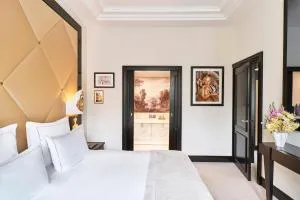
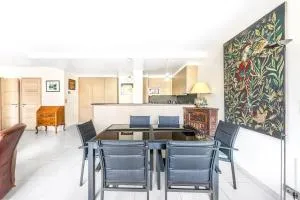
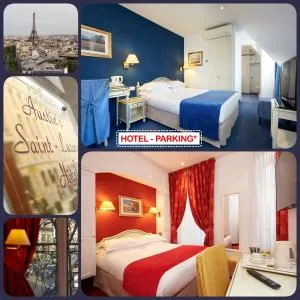
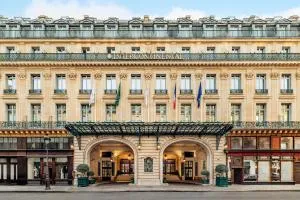
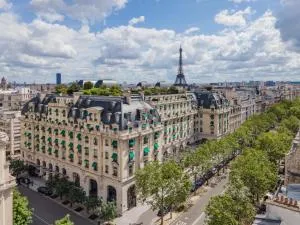
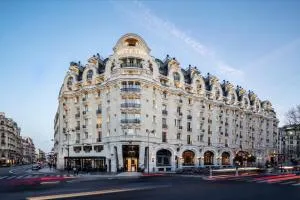
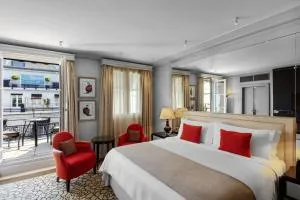
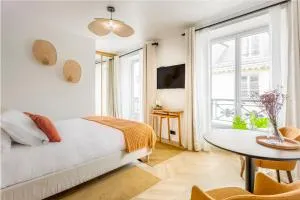
In the beautiful, romantic, and vibrant French city of Paris, we can arrange all kinds and categories of accommodation. Our agency has about 3,900 options available. We offer luxury hotels and residences, apartments, guesthouses, and hostels. We are happy to provide accommodation tailored to your needs. For those who like to be in the heart of the action, we offer places near famous landmarks such as the Louvre Museum, Eiffel Tower, or Sacré-Cœur. Prices tend to be higher in these areas due to their popularity. Accommodation is spread across both banks of the Seine. The city is dense with metro stations, making it easy to find a hotel within convenient reach. For families with children, smaller cozy guesthouses, family-friendly hotels, or multi-bedroom apartments with fully equipped kitchens are recommended. For reliable stays, we offer well-known hotel chains such as Golden Tulip and Intercontinental.
History of Paris
The earliest mentions of the territory of Paris date back to 8000–6500 BC. It was once part of Gaul, with infrastructure like sewers, baths, and theaters dating from the 1st to 3rd centuries AD, some remnants of which survive. The city was initially centered on the Île de la Cité, first settled by Celtic tribes in the 3rd century BC. The city’s name comes from the Parisii tribe. Key historical figures include Hugh Capet, who made Paris the capital of his kingdom and founded the Capet dynasty, and King Philip II Augustus (1165–1223), who laid the foundations of the Louvre Palace and allowed the establishment of the University of Paris. Development was slow until the 15th century due to frequent epidemics. During the Hundred Years' War, Paris was under English control but was retaken by King Charles VII in 1436. Significant events include the French Revolution (1789–1799) and the Franco-Prussian War of 1870 followed by the Paris Commune.
Transportation to and within Paris
Paris is 1,070 km from Prague by road and 864 km by air. The main international airport is Charles de Gaulle Airport, located northeast of the city center with three terminals serving leading European and global destinations. Air France is the largest airline. Transport to the city center includes shuttle buses running every 8 minutes and Air France buses taking about 50 minutes. Orly International Airport to the northwest offers buses (OrlyBus) and metro access. Paris does not have a main train station but six separate stations each serving different parts of Europe. Metro and shuttle buses connect these stations. Regular bus services like Eurolines, Megabus, and IDBUS connect Paris with other cities. Driving in Paris requires patience due to frequent traffic jams and challenging parking. Public transport includes metro, buses, trams, Montmartre funicular, Vogéo river line on the Seine, and Vélib bike rental system with stations throughout the city.
Landmarks, Attractions, and Activities in Paris
Tourists come to Paris for culture, fashion, and education. The most famous university is the Sorbonne. Top attractions include Notre-Dame Cathedral, the Louvre Museum, Eiffel Tower, and Arc de Triomphe. Montmartre is the highest hill at 130m with the Sacré-Cœur Basilica at its peak. Île de la Cité, best viewed by boat on the Seine, hosts Notre-Dame. Near the city center is the business district La Défense with modern glass skyscrapers. The famous boulevard Champs-Élysées connects Place Charles de Gaulle (Arc de Triomphe) with Place de la Concorde and hosts the final stage of the Tour de France annually. Other notable sites are Musée d'Orsay, the Invalides with Napoleon’s tomb, and the Panthéon in the Latin Quarter housing tombs of artists and scientists like Victor Hugo, Voltaire, Alexandre Dumas, and Marie Curie.
Fashion in Paris
Paris is inseparably associated with fashion and shopping, hosting numerous department stores, fashion boulevards, and large shopping centers. It is home to world-famous brands like Chanel, Dior, Givenchy, Louis Vuitton, Hermès, and Yves Saint Laurent. Paris is also a leading city in jewelry production. Famous department stores include Galeries Lafayette, Printemps, La Samaritaine, and Forum des Halles.
Sports in Paris
Paris is also connected with many prominent sports events throughout the year. The Tour de France cycling race ends on the Champs-Élysées. Tennis is represented by the famous Roland Garros tournament. Football is prominent with Paris Saint-Germain club. Paris hosted the Olympics twice (1900 and 1924). Popular sports also include modern fencing and show jumping.
Famous Personalities of Paris
Notable personalities linked to Paris include painters Claude Monet, Jean-Antoine Watteau, and Vincent van Gogh; politicians Hugh Capet, Charles de Gaulle, and Napoleon Bonaparte; writers François Villon, Victor Hugo, Oscar Wilde; and musicians Frédéric Chopin and Richard Wagner.


 Čeština
 Dansk
Dansk Deutsch
  Español
  Français
 Italiano
  Magyar
 Norsk
Norsk Polski
 Português
 Slovenčina
 Suomi
Suomi Svenska
  Yкраїнський
 По-русски
 عربي
عربي 简体中文
简体中文